
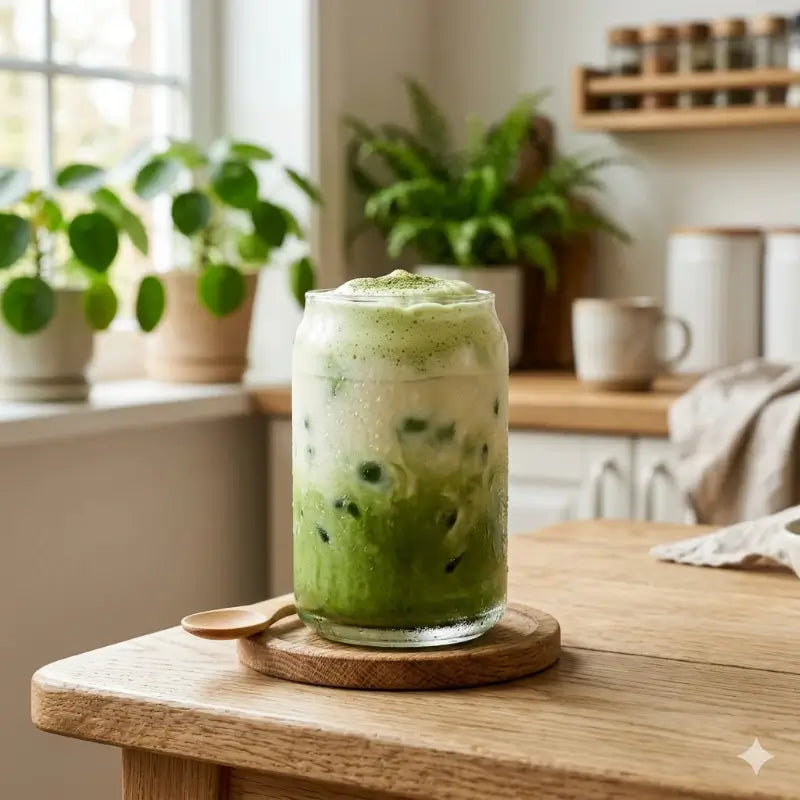
Unlike coffee, matcha provides a calmer and more sustained energy boost thanks to its natural combination of caffeine and L-theanine. That’s why many people now search for how to make a matcha latte at home instead of buying expensive café versions.
Using high-quality ceremonial matcha and the right preparation tools makes a major difference in flavor, texture, and foam quality. Many beginners start with a complete starter kit, such as the Complete Matcha Preparation Set, to simplify the process.
In this guide, you’ll learn:
-
The best matcha latte recipe for beginners
-
How to make a matcha latte without a whisk or frother
-
How to prepare an iced matcha latte
-
Common mistakes that cause bitterness or clumps
-
The difference between a matcha latte and coffee
What Is a Matcha Latte?
A matcha latte is made by mixing finely ground green tea powder with hot water and milk.
If you're completely new to matcha, our guide covering everything about matcha tea explains its origins, preparation methods, and health benefits in more detail.
Traditional matcha is whisked until smooth before being combined with steamed or cold milk. For smoother foam and fewer clumps, many matcha drinkers prefer using a traditional 100-Prong Bamboo Matcha Whisk. Because matcha uses the entire tea leaf in powdered form, it contains:
-
More antioxidants
-
Natural caffeine
-
L-theanine for smoother focus
-
A richer, creamier tea flavor
Many people also drink matcha daily because of its antioxidant content and smoother energy profile. Learn more about the benefits of matcha and why it's becoming a popular coffee alternative.
A well-made matcha latte should taste:
-
Smooth
-
Slightly sweet
-
Creamy
-
Lightly grassy, not bitter
Matcha Latte vs Coffee
Many people switch from coffee to matcha because the energy experience feels different.
Matcha Latte
-
Smoother energy release
-
Less jitteriness
-
Gentler on digestion for many people
-
Naturally sweeter and creamier taste
-
Contains L-theanine for calm focus
Coffee Latte
-
Faster caffeine hit
-
Stronger roasted flavor
-
Higher chance of energy crash or jitters
-
Usually more acidic
If you want steady focus without the sharp caffeine spike, a matcha latte can be a great coffee alternative.
If you're comparing caffeine effects, focus, and long-term energy levels, read our full guide on matcha vs coffee.
Ingredients for the Best Matcha Latte Recipe
Basic Ingredients
-
1–2 grams ceremonial-grade matcha such as Imperial Cloud Ceremonial Matcha for a smoother, less bitter latte
-
70 ml hot water (70–80°C)
-
150–200 ml milk of choice
-
Optional sweetener: honey, maple syrup, agave, or vanilla syrup
Best Milk Options
-
Oat milk → creamiest texture and best foam
-
Dairy milk → classic café-style richness
-
Almond milk → lighter and nuttier
-
Coconut milk → naturally sweeter and richer
If you're new to matcha, smoother ceremonial blends like Jade Cloud Ceremonial Matcha are often easier for beginners because of their naturally sweeter and less grassy flavor profile.
Why Water Temperature, Sifting, and Milk Matter
Water Temperature
Boiling water burns delicate matcha compounds and creates bitterness. Using water around 70–80°C keeps the flavor smoother, sweeter, and more balanced.
Sifting the Matcha
Matcha powder naturally clumps from humidity. A dedicated preparation setup with a proper bowl and bamboo scoop can also improve consistency and reduce clumping. The Matcha Bowl with Spout & Chashaku is especially useful for beginners learning proper pouring and whisking techniques. Sifting creates a silkier drink and helps the powder dissolve evenly.
Milk Type
Higher-fat milk usually creates better foam and a creamier texture. Oat milk is especially popular because it froths well and complements matcha’s earthy flavor.
Matcha Quality
Ceremonial-grade matcha tastes smoother, naturally sweeter, and less bitter than lower-quality culinary matcha.
Not sure what makes matcha high quality? Read our guide on how to choose high-quality matcha tea to learn how color, texture, and origin affect flavor and smoothness.
Step-by-Step: How to Make a Matcha Latte at Home
If you want to master traditional preparation techniques before making lattes, read our complete guide on how to make the perfect matcha at home.
1. Sift the Matcha
Sift 1–2 grams of matcha into a bowl or mug to remove clumps.
2. Add Hot Water
Pour in 70 ml of hot water at 70–80°C.
Avoid boiling water, as it can make matcha taste bitter.
3. Whisk Until Smooth
Using a bamboo whisk (chasen) like the 100-Prong Bamboo Matcha Whisk or an Electric Matcha Frother, whisk quickly in a zigzag or “W” motion until small foam bubbles form on top.
The matcha should look smooth and creamy without visible clumps.
4. Heat and Froth the Milk
Warm your milk separately and froth until light and creamy.
An Electric Matcha Frother can help create smoother foam and a more consistent café-style texture at home.
For café-style foam, avoid overheating the milk.
5. Combine the Matcha and Milk
Slowly pour the milk over the prepared matcha.
For a layered presentation, pour gently over the back of a spoon.
6. Sweeten to Taste
Add honey, maple syrup, vanilla syrup, or agave if desired.
Stir gently and serve immediately.
How to Make a Matcha Latte Without a Whisk or Frother
You can still make a smooth matcha latte without special tools.
Option 1: Shake It in a Jar
Add matcha, warm water, and sweetener into a sealed jar and shake vigorously for 20–30 seconds.
This is one of the easiest ways to make a matcha latte without a whisk.
Option 2: Use a Blender
Blend matcha, water, and milk to achieve a very smooth, frothy texture.
This works especially well for iced matcha lattes.
Option 3: Make a Matcha Paste
Mix matcha with a small amount of honey or syrup first to create a smooth paste, then add water.
This helps reduce clumps naturally.
How to Make an Iced Matcha Latte Like a Café
An iced matcha latte tastes best when the matcha base is smooth and chilled before combining with ice.
Step-by-Step Iced Matcha Latte
-
Sift and whisk matcha with warm water
-
Add the sweetener while the matcha is still warm
-
Let the matcha cool slightly
-
Fill a glass with ice. Serving iced matcha in a clear reusable cup helps showcase the layered café-style presentation. The Matcha Glass Cup with Straw works especially well for iced matcha recipes.
-
Add cold milk
-
Slowly pour the matcha over the milk for café-style layers
For a smoother iced latte:
-
Avoid pouring hot matcha directly over ice
-
Use filtered water for a cleaner flavor
-
Sweeten before chilling for better mixing
Matcha Latte Ratio Guide
Strong Matcha Latte
1 g matcha: 100–150 ml milk
Balanced Matcha Latte
1.5 g matcha: 150–200 ml milk
Mild and Creamy Matcha Latte
1 g matcha: 200 ml milk
You can adjust the ratio depending on whether you prefer a stronger tea flavor or a creamier latte.
Beginner Troubleshooting Checklist
Why is my matcha latte bitter?
-
The water is too hot
-
Matcha quality is low
-
Too much matcha was used
Why is my matcha clumpy?
-
Matcha was not sifted
-
The water quantity was too low
-
Powder was added too quickly
Why is there no foam?
-
Whisking was too slow
-
Milk was not frothed properly
-
Low-fat milk was used
Why does my latte taste weak?
-
Too much milk
-
Not enough matcha
-
The matcha quality is stale or old
Common Mistakes to Avoid
-
Using boiling water
-
Skipping the sifting step
-
Using old or low-quality matcha
-
Overheating milk
-
Adding too much sweetener
-
Letting prepared matcha sit too long before drinking
FAQs
What tools do I need to make matcha at home?
Beginners usually need ceremonial-grade matcha, a whisk, a bowl, and a scoop. Starter kits like the Bamboo Matcha Whisk Set or the Complete Matcha Preparation Set simplify the process and help create smoother matcha lattes.
Can I make a matcha latte without a whisk?
Yes. You can shake matcha in a jar, blend it, or mix it into a paste before adding water.
What is the best milk for a matcha latte?
Oat milk is one of the best options because it froths well and complements matcha’s flavor naturally.
Is ceremonial-grade matcha necessary?
For lattes, ceremonial-grade matcha provides a smoother and less bitter taste, especially if you drink matcha regularly.
Can I use culinary-grade matcha?
Yes, especially for sweetened or blended recipes, though the flavor may be slightly stronger and more bitter.
Is matcha healthier than coffee?
Matcha contains antioxidants and L-theanine, which may provide smoother energy and less jitteriness compared to coffee.
Conclusion
Learning how to make a matcha latte at home is simple once you understand the basics: quality matcha, proper water temperature, smooth mixing, and balanced milk ratios.
Whether you prefer a hot matcha latte, an iced matcha latte, or a version without a whisk or frother, small technique adjustments make a big difference in flavor and texture.
With the right preparation, you can create a café-style matcha latte that is creamy, smooth, energizing, and consistently delicious.
Share: