
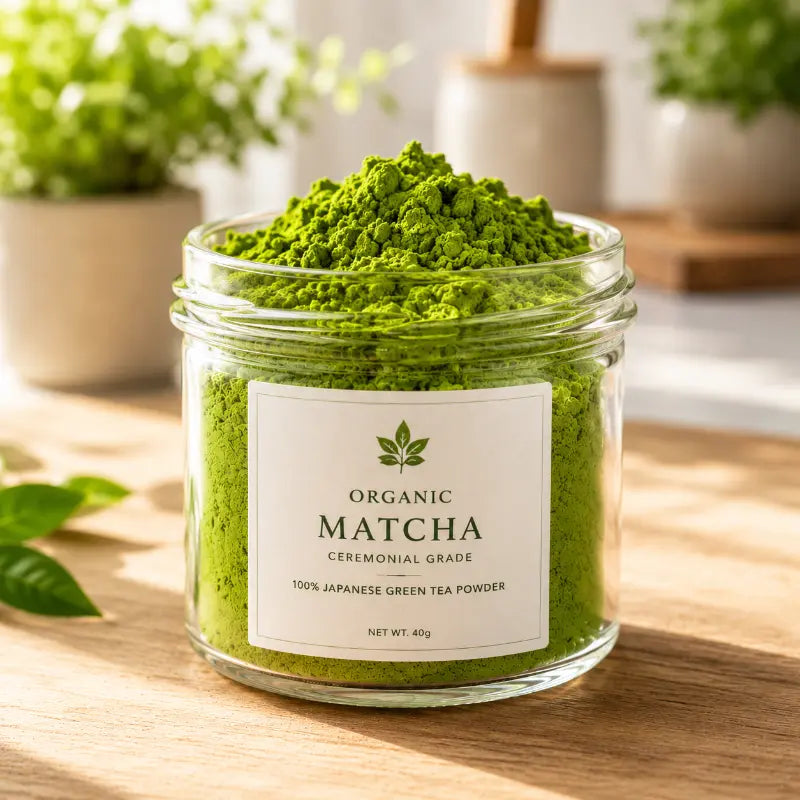
Choosing the right matcha tea has a major impact on flavor, texture, energy, and overall experience. Many people buy matcha expecting a smooth and creamy drink, only to end up with something bitter, dull, or grassy.
The difference usually comes down to quality.
Many beginners start with high-quality ceremonial blends like Imperial Cloud Ceremonial Matcha because smoother flavor and better texture make the matcha experience much easier to enjoy.
High-quality matcha should taste naturally sweet, rich in umami, smooth on the tongue, and vibrant green in color. Lower-quality matcha often tastes harsh, bitter, and flat.
This guide explains how to recognize good matcha tea using practical quality signals such as color, aroma, texture, froth, freshness, packaging, and origin so you can confidently choose the best matcha for your needs.
Understand the Different Types of Matcha
Not all matcha is made for the same purpose. One of the most common mistakes beginners make is buying the wrong grade.
Ceremonial Grade Matcha
Ceremonial-grade matcha is the highest-quality matcha tea and is traditionally prepared with water only.
Premium ceremonial matcha, such as Imperial Cloud Ceremonial Matcha, is ideal for traditional preparation, daily drinking, and smoother matcha lattes.
It is made from the youngest first-harvest tea leaves, which contain more amino acids and chlorophyll. This creates a smoother taste, natural sweetness, creamy texture, and deep umami flavor.
High-quality ceremonial matcha should have:
- Bright, vibrant green color
- Fine silky texture
- Smooth finish without bitterness
- Natural sweetness and umami
This type of matcha is best for:
- Traditional preparation
- Daily drinking
- Thin tea (usucha)
- Premium iced matcha
- Light matcha lattes
Latte Grade Matcha
Latte grade matcha sits between ceremonial and culinary matcha.
It is designed specifically for milk-based drinks where the flavor must remain noticeable after adding milk or plant alternatives. A slightly stronger flavor profile helps the matcha stand out without becoming overwhelmingly bitter.
Latte matcha is ideal for:
- Matcha lattes
- Iced matcha drinks
- Café-style beverages
- Daily use
If you regularly prepare milk-based drinks, read our complete guide on how to make the perfect matcha latte at home.
Many people mistakenly use low-quality culinary matcha for lattes, which often creates a bitter aftertaste. A proper latte-grade matcha maintains balance while still being smooth enough to drink comfortably.
Culinary Grade Matcha
Culinary matcha is designed for recipes, desserts, smoothies, and baking.
It is usually made from more mature tea leaves, resulting in a stronger flavor and slightly more bitterness. This stronger profile helps the matcha remain noticeable when combined with sugar, dairy, or other ingredients.
Culinary matcha works best for:
- Baking
- Smoothies
- Ice cream
- Matcha desserts
- Protein shakes
Its color is often less vibrant than ceremonial-grade matcha, which is normal for cooking applications.
What High-Quality Matcha Should Look Like
Color Test
Color is one of the fastest ways to recognize high-quality matcha tea.
Good matcha should appear:
🟢 Bright green
🟢 Vibrant and fresh
🟢 Almost glowing under light
Dull, yellowish, or olive-colored matcha usually indicates:
- Older leaves
- Poor storage
- Oxidation
- Lower-grade production
Color is often one of the fastest visual indicators of freshness, and proper shade-growing techniques in Japanese matcha production.
The bright green color comes from chlorophyll, which increases when tea plants are shade-grown before harvest. This traditional shading process also improves sweetness and umami.
That is why color is not only visual — it directly reflects cultivation quality and freshness.
Texture Test
High-quality matcha should feel:
- Ultra-fine
- Smooth
- Silky
- Soft like powdered sugar
Premium matcha is traditionally stone-ground, creating an extremely fine texture that dissolves evenly in water.
High-quality ceremonial matcha should dissolve smoothly and create a creamy mouthfeel without noticeable graininess.
If matcha feels gritty or coarse, it is often lower quality or poorly processed. Coarse particles can create a chalky mouthfeel and weaker foam during whisking.
Aroma Test
Fresh matcha should smell:
- Sweet
- Fresh
- Grassy
- Creamy
- Slightly marine or vegetal
A pleasant aroma usually signals freshness and proper storage.
Poor-quality or stale matcha may smell:
- Dusty
- Flat
- Musty
- Bitter
- Hay-like
Aroma matters because matcha contains delicate volatile compounds that disappear quickly when exposed to air, light, or heat.
The Froth Test — A Simple Way to Judge Matcha Quality
One of the easiest ways to identify good matcha tea is the froth test.
When whisked correctly using a traditional bamboo whisk, high-quality matcha creates a dense layer of tiny microfoam bubbles across the surface.
Proper whisking technique and fine particle size both contribute to smoother foam and more stable microbubbles.
Good froth usually indicates:
- Fine particle size
- Freshness
- Proper grinding
- High amino acid content
Low-quality matcha often creates:
- Large unstable bubbles
- Weak foam
- Fast separation
The froth test is useful because it combines multiple quality indicators into one visible result.
How Good Matcha Should Taste
High-quality matcha should taste:
- Smooth
- Creamy
- Rich in umami
- Naturally sweet
- Balanced
Bitterness should be minimal.
A harsh or aggressively bitter taste usually means:
- Lower-quality leaves
- Poor processing
- Oxidation
- Improper storage
Many first-time buyers assume bitterness means “strong matcha,” but premium Japanese matcha is known for balance and softness rather than intensity alone.
Why Freshness Matters When Buying Matcha
Freshness is one of the most overlooked matcha quality factors.
Because matcha is finely ground, it oxidizes faster than regular tea once exposed to air.
Fresh matcha typically has:
- Brighter color
- Sweeter aroma
- Better foam
- More vibrant flavor
Learning proper preparation and storage techniques can dramatically improve matcha flavor and longevity at home. Older matcha becomes dull, bitter, and flat over time.
When buying matcha, check for:
- Recent harvest dates
- Fresh production dates
- Small-batch packaging
Avoid buying large quantities unless you consume matcha regularly.
Packaging and Storage: Important Quality Signals
Best Packaging for Matcha
High-quality matcha is usually sold in:
- Airtight tins
- UV-protected containers
- Opaque packaging
- Nitrogen-sealed bags
Good packaging protects matcha from oxidation, moisture, heat, and light. Cheap packaging often causes flavor deterioration long before the matcha reaches the customer.
You can also read our complete guide on how to make the perfect matcha at home to learn more about water temperature, whisking, and freshness preservation.
How to Store Matcha Properly
To keep matcha fresh:
- Store it airtight
- Keep it away from sunlight
- Avoid heat and humidity
- Refrigerate after opening if possible
Proper storage preserves aroma, color, and sweetness much longer.
Even premium ceremonial matcha can lose quality quickly if stored incorrectly.
Where the Best Matcha Comes From
The best matcha tea traditionally comes from Japan, especially regions known for premium cultivation techniques.
Uji Matcha (Kyoto)
Uji is considered one of the most prestigious matcha-producing regions in Japan and is famous for refined ceremonial matcha with deep umami and sweetness.
Nishio Matcha
Nishio is known for producing smooth, rich matcha commonly used in both traditional tea and modern cafés.
Shizuoka Matcha
Shizuoka is one of Japan’s largest tea-growing regions and produces a wide range of matcha styles.
Japanese matcha quality is strongly connected to traditional cultivation practices such as:
- Shade growing
- Careful leaf selection
- Steam processing
- Stone milling
Organic Matcha — Is It Better?
Organic matcha is grown without synthetic pesticides or fertilizers.
Benefits may include:
- Cleaner cultivation practices
- Environmentally conscious farming
- Reduced chemical exposure
However, organic certification alone does not guarantee superior taste or quality.
Some exceptional Japanese tea farms prioritize traditional small-scale production but may not pursue formal organic certification due to cost or farming philosophy.
The best approach is to evaluate both certification and actual quality indicators together.
How to Choose Matcha Based on Your Needs
Best Matcha for Beginners
A smooth ceremonial or latte-grade matcha, such as Jade Cloud Ceremonial Matcha, is usually the easiest entry point because it has less bitterness and better balance.
Best Matcha for Daily Drinking
Choose ceremonial grade matcha with balanced sweetness and affordability for regular use.
Best Matcha for Lattes
Latte-grade matcha works best because its stronger flavor remains noticeable after adding milk.
For creamier café-style drinks, see our full guide on how to make matcha lattes at home.
Best Matcha for Baking and Smoothies
Culinary matcha is ideal for recipes where a stronger flavor is needed.
Common Mistakes When Buying Matcha
Many buyers accidentally choose poor matcha because they focus only on marketing or price.
Common mistakes include:
- Buying based only on “ceremonial” labeling
- Ignoring freshness dates
- Choosing oversized bags
- Confusing culinary and drinking matcha
- Overlooking packaging quality
- Assuming bitterness equals strength
Many bitterness and texture problems actually come from preparation mistakes rather than matcha quality alone.
Learning to evaluate matcha visually and sensorially leads to much better purchasing decisions.
Final Checklist Before Buying Matcha Tea
Before buying matcha, check:
✅ Bright green color
✅ Fine silky texture
✅ Sweet fresh aroma
✅ Strong microfoam when whisked
✅ Japanese origin
✅ Airtight packaging
✅ Fresh harvest or production date
✅ Correct grade for your intended use
These indicators help you recognize high-quality matcha tea consistently.
FAQ About Choosing Matcha
What tools help create smoother matcha?
Using a bamboo whisk, a proper bowl, and high-quality ceremonial matcha helps create a smoother texture and more stable foam. Many beginners use traditional preparation kits to improve consistency at home.
What is the best matcha for beginners?
Ceremonial or latte-grade matcha is usually best for beginners because it is smoother, less bitter, and easier to enjoy daily.
Is ceremonial matcha worth it?
Yes, especially if you drink matcha with water or minimal milk. High-quality ceremonial matcha provides a smoother and more complex flavor experience.
Why does my matcha taste bitter?
Bitterness often comes from low-quality leaves, oxidation, improper storage, or using water that is too hot.
Should matcha be refrigerated?
Yes. After opening, storing matcha in the refrigerator inside an airtight container helps preserve freshness longer.
How can you tell if matcha is fresh?
Fresh matcha usually has a vibrant green color, sweet grassy aroma, smooth texture, and stable foam when whisked.
What color should good matcha be?
High-quality matcha should be bright, vivid green rather than yellowish or dull olive green.
Can culinary matcha be used for drinking?
It can, but it will usually taste more bitter and less smooth than ceremonial or latte-grade matcha.
Conclusion
Choosing the best matcha tea is about understanding real quality signals rather than relying only on branding or price.
Color, aroma, texture, froth, freshness, packaging, and origin all influence the final experience in the cup.
High-quality ceremonial matcha delivers a smooth, creamy, and naturally sweet experience, while latte and culinary matcha are designed for specific use cases.
Once you understand these differences, buying matcha becomes much easier — and far more rewarding.
Choosing high-quality matcha together with proper preparation techniques can dramatically improve flavor, texture, sweetness, and overall enjoyment.
Share:
All About Matcha Tea: Benefits & Preparation
Why Choose Organic Matcha Tea and Which One to Pick?