
Learning how to make the perfect matcha at home is not complicated, but small details make a huge difference in flavor, texture, and overall experience.
Good matcha should taste smooth, fresh, creamy, and balanced — not bitter, clumpy, or flat.
Many beginners struggle with:
-
Matcha clumps
-
Bitter taste
-
Weak flavor
-
No foam
-
Incorrect water temperature
The good news is that most of these problems are easy to fix once you understand the basics.
Using high-quality ceremonial matcha together with proper preparation tools can dramatically improve flavor, texture, and foam quality. Many beginners start with the Complete Matcha Preparation Set to simplify the learning process at home.
This guide explains exactly how to make matcha with a whisk, how to make matcha without a whisk, how to prepare a matcha latte, and how to avoid common mistakes so your matcha tastes smooth and frothy every time.
What You Need to Make Matcha
Traditional Matcha Tools
Traditional matcha preparation uses a few simple tools:
-
Matcha powder (ceremonial grade recommended)
-
Bamboo scoop (chashaku)
-
Fine sieve or sifter
-
Hot water
Traditional tools help create smoother texture and better foam, but beginners do not need a full ceremonial setup to start enjoying matcha at home.
Beginner-Friendly Alternatives
If you do not have traditional tools, you can still make good matcha using:
-
A small blender
-
A shaker bottle or mason jar
-
A regular kitchen whisk
The texture may be slightly different, but these methods still work well for everyday matcha and lattes.
Traditional vs Quick-Prep Matcha
Traditional Ceremonial Matcha
Traditional preparation focuses on texture, aroma, and foam quality.
It is usually made with:
-
Water only
-
A bamboo whisk
This method creates a cleaner and more refined flavor experience. If you're unsure how to identify premium-quality matcha, read our guide on how to choose high-quality matcha tea.
Quick Everyday Matcha
Quick-prep matcha is designed for convenience.
Instead of carefully whisking in a bowl, many people:
-
Shake matcha in a jar
-
Use a milk frother
-
Blend it directly into smoothies
This method is practical for busy mornings and daily routines.
Matcha Latte Preparation
If you want a creamier café-style drink, read our complete guide on how to make the perfect matcha latte at home.
Matcha lattes use a stronger concentration of matcha, so the flavor remains noticeable after adding milk.
Latte preparation works especially well with:
-
Oat milk
-
Almond milk
-
Dairy milk
-
Coconut milk
The best method depends on whether you prefer a creamy café-style drink or a lighter traditional matcha.
Step-by-Step: How to Make Matcha With a Whisk
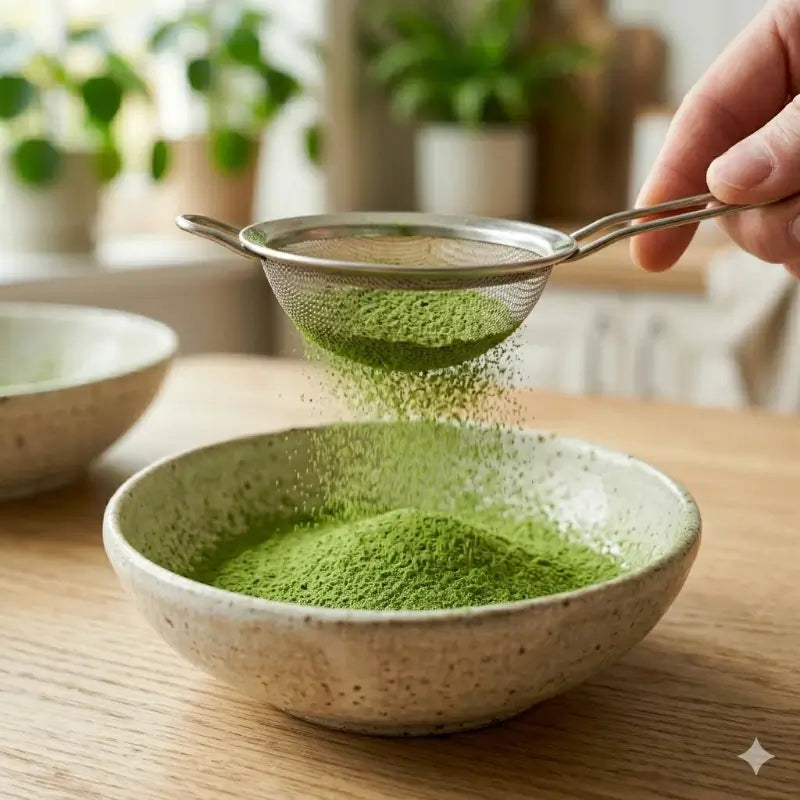
Step 1: Sift the Matcha
Sift 1–2 grams of matcha (about 1–2 bamboo scoops or ½ teaspoon) into a bowl.
This is one of the most important steps if you want a smooth matcha without clumps.
Using a proper bowl and whisk can also improve foam consistency and help create a smoother texture during preparation.
Matcha naturally absorbs moisture from the air, which causes tiny clumps to form in the powder over time. Sifting breaks these apart and improves texture and foam quality.
Step 2: Add Hot Water
Add about 60–80 ml of hot water.
The best water temperature for matcha is around 70–80°C (158–176°F).
Avoid boiling water.
Water that is too hot can:
-
Burn delicate tea compounds
-
Increase bitterness
-
Flatten sweetness and umami
Step 3: Whisk the Matcha
Using a bamboo whisk, whisk quickly in a zig-zag “W” or “M” motion rather than stirring in circles.
Traditional bamboo whisks help create smaller foam bubbles and a smoother texture compared to regular kitchen whisks.
Focus on speed and light wrist movement.
After about 15–20 seconds, you should see:
-
Small microfoam bubbles
-
Smooth texture
-
Even green color
Good foam is usually a sign of proper whisking and fine-quality matcha.
Step 4: Serve Immediately
Drink matcha immediately after preparation.
Freshly whisked matcha has:
-
Better aroma
-
Better texture
-
Stronger flavor
-
Better foam stability
Allowing matcha to sit too long causes separation and flavor loss.
How to Make Matcha Without a Whisk
Mason Jar Method
Add matcha and warm water into a mason jar or shaker bottle.
Shake vigorously for 20–30 seconds until smooth.
This is one of the easiest ways to make matcha at home without special tools.
Milk Frother Method
A handheld milk frother creates surprisingly smooth matcha.
Simply:
-
Add sifted matcha to water
-
Use the frother for 10–15 seconds
-
Pour into your cup
This method works especially well for matcha lattes.
Blender Method
Blenders work best for:
-
Iced matcha
-
Smoothies
-
Large servings
-
Matcha lattes
Blending creates a very smooth consistency and helps fully dissolve the powder.
Best Water Temperature for Matcha
The best water temperature for matcha is between 70°C and 80°C (158°F–176°F).
Temperature matters because matcha is extremely sensitive to heat.
| Water Temperature | Result |
|---|---|
| Too hot | Bitter and harsh |
| Too cold | Weak flavor and poor mixing |
| Proper range | Smooth, sweet, balanced |
Water temperature is one of the biggest factors affecting bitterness and sweetness in matcha preparation.
Why Water Quality Matters
Water quality changes matcha flavor more than many people realize.
Soft water usually produces:
-
Sweeter flavor
-
Better balance
-
Smoother mouthfeel
Very hard or mineral-heavy water can flatten flavor and reduce matcha’s natural sweetness.
Filtered water is often the best option for making matcha at home.
How to Make a Matcha Latte
Hot Matcha Latte
-
Prepare matcha concentrate first
-
Add warm frothed milk
-
Sweeten if desired
For a stronger flavor, use slightly more matcha than traditional preparation.
Iced Matcha Latte
-
Shake or whisk matcha with a small amount of water
-
Fill a glass with ice. Using a clear reusable cup like the Matcha Glass Cup with Straw helps showcase the layered café-style appearance of iced matcha lattes.
-
Add milk
-
Pour matcha over the top
This creates a smooth layered matcha latte.
Best Milk for Matcha
Popular milk choices include:
-
Oat milk → creamy and naturally sweet. Oat milk is especially popular in café-style matcha latte recipes because of its creamy texture and natural sweetness.
-
Almond milk → lighter flavor
-
Dairy milk → rich texture
-
Coconut milk → tropical flavor
Oat milk is one of the most popular options because it complements matcha’s grassy and umami notes well.
Common Matcha Problems and How to Fix Them
Why Is My Matcha Bitter?
Possible causes:
-
Water too hot
-
Low-quality matcha
-
Too much powder
-
Poor storage
Use ceremonial-grade matcha and lower water temperature slightly. You can also read our detailed guide on how to choose high-quality matcha tea to avoid bitterness caused by poor-quality powder.
Why Is My Matcha Clumpy?
Clumps usually happen because matcha absorbs moisture easily.
Always sift matcha before adding water.
Why Is My Matcha Not Frothy?
Common reasons:
-
Whisking too slowly
-
Circular stirring motion
-
Poor-quality whisk
-
Coarse or old matcha
Use quick zig-zag whisking for the best foam.
Why Does My Matcha Taste Weak?
Weak matcha may come from:
-
Too much water
-
Too little powder
-
Low-quality matcha
Try increasing the matcha slightly or reducing water volume.
Matcha Storage and Freshness
Freshness is critical for good matcha flavor.
After opening, matcha gradually loses:
-
Aroma
-
Bright green color
-
Sweetness
-
Umami
For best quality:
-
Store matcha airtight
-
Keep away from heat and sunlight
-
Refrigerate after opening if possible
-
Avoid moisture exposure
Most matcha tastes best within 1–2 months after opening.
Signs of stale matcha include:
-
Dull olive color
-
Flat aroma
-
Increased bitterness
Frequently Asked Questions
What tools are best for beginners learning how to make matcha?
Most beginners start with ceremonial-grade matcha, a bamboo whisk, a bowl, and a scoop. Starter kits like the Complete Matcha Preparation Set simplify the preparation process and help create smoother matcha with better foam.
How do you make matcha without clumps?
Always sift matcha before adding water. This breaks apart moisture clumps and improves texture.
Can you make matcha without a bamboo whisk?
Yes. You can use a milk frother, shaker bottle, blender, or kitchen whisk.
What is the best water temperature for matcha?
Around 70–80°C (158–176°F) is ideal for balanced flavor and reduced bitterness.
Why is my matcha bitter?
Bitterness usually comes from boiling water, poor-quality matcha, or improper storage.
How long does matcha stay fresh after opening?
For the best flavor, consume matcha within 1–2 months after opening and store it airtight.
What milk works best in a matcha latte?
Oat milk is one of the most popular choices because of its creamy texture and mild sweetness.
Conclusion
Making the perfect matcha is less about complexity and more about precision.
Small details like water temperature, sifting, whisking technique, and freshness dramatically affect the final result.
Whether you prefer traditional ceremonial matcha, quick everyday preparation, or creamy matcha lattes, understanding these fundamentals helps you create smoother, better-tasting matcha at home every time.
Share:
All About Matcha Tea: Benefits & Preparation