
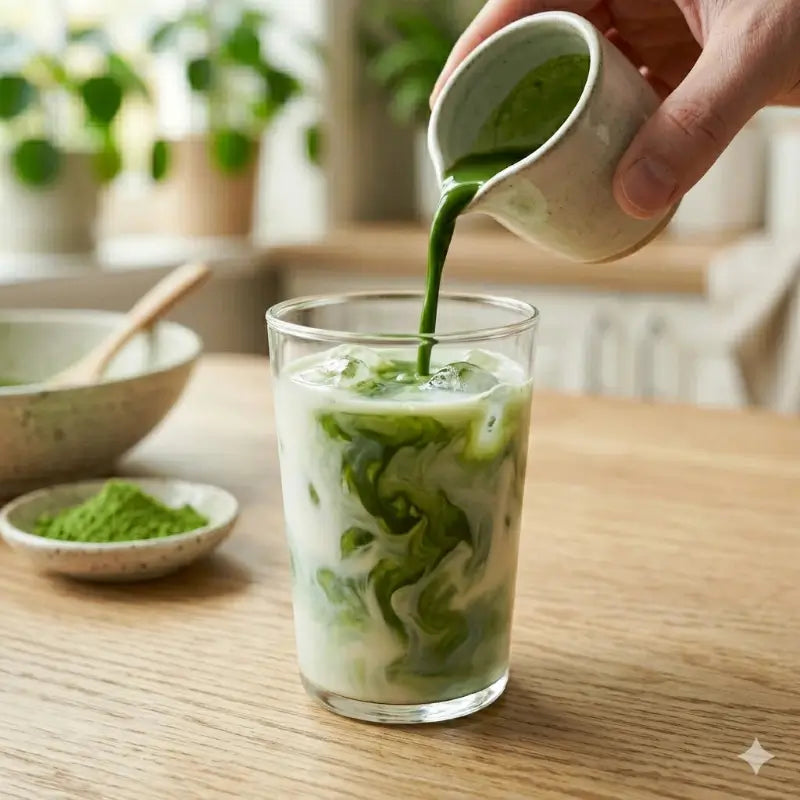
Matcha is more than just a wellness trend. This vibrant Japanese green tea powder has become a daily ritual for people looking for smoother energy, sharper focus, and a healthier alternative to coffee.
Unlike coffee, matcha delivers caffeine alongside L-theanine — a naturally calming amino acid that helps create steady alertness rather than a sudden spike and crash.
Many people who switch from coffee to matcha describe the difference the same way: fewer jitters, calmer mornings, and more stable energy throughout the day.
For beginners, matcha lattes are often the easiest transition because milk softens matcha’s earthy flavor while still providing smoother energy than coffee. You can learn more in our guide on how to make a matcha latte at home.
In this guide, you’ll learn:
-
The main benefits of matcha
-
Matcha vs coffee differences
-
Matcha caffeine vs coffee
-
Whether matcha is healthier than coffee
-
How much matcha can you drink daily
-
What science actually says about matcha
What Is Matcha?
Matcha is a powdered form of shade-grown Japanese green tea leaves.
High-quality ceremonial matcha, such as Imperial Cloud Ceremonial Matcha, is made from carefully shade-grown tea leaves designed for smoother flavor and richer umami.
Unlike regular green tea, where the leaves are steeped and discarded, matcha allows you to consume the entire leaf. This provides a more concentrated source of:
-
Catechins (especially EGCG antioxidants)
-
L-theanine
-
Natural caffeine
-
Chlorophyll and plant compounds
Because matcha combines caffeine with calming amino acids, its effect on the body feels different from both coffee and standard tea.
Matcha vs Coffee: Key Differences
Both matcha and coffee contain caffeine, but they affect the body differently.
If you want a deeper comparison of caffeine effects, focus, digestion, and anxiety sensitivity, read our full guide on matcha vs coffee.
| Matcha | Coffee |
|---|---|
| Gradual energy release | Fast caffeine spike |
| Calm focus | Intense stimulation |
| Lower chance of a crash | More common energy crash |
| Contains L-theanine | No L-theanine |
| Often gentler on digestion | Can feel acidic for some people |
Many people choose matcha because the energy feels smoother and more stable, especially during work, studying, or long afternoons.
Matcha Caffeine vs Coffee
A typical serving of matcha contains around 30–70 mg of caffeine, depending on quality and preparation.
Coffee usually contains:
-
80–120+ mg per cup
Even though matcha often has less caffeine than coffee, many people feel energized for longer because caffeine absorption is slower.
Preparation quality and matcha grade can also influence how smooth or bitter the caffeine experience feels.
Why Matcha Feels Different
L-theanine may help:
-
Slow caffeine absorption
-
Promote calm alertness
-
Reduce overstimulation
-
Support concentration
This is one reason many users report fewer jitters and less anxiety compared to coffee.
7 Science-Backed Benefits of Matcha
1. Sustained Energy Without a Crash
This steadier stimulation profile is one reason many people gradually replace multiple daily coffees with matcha.
Matcha releases caffeine more gradually, which may help support longer-lasting energy and focus.
2. High in Antioxidants
Matcha contains catechins like EGCG that help protect cells from oxidative stress.
3. Supports Focus and Mental Clarity
Many people preparing matcha for productivity prefer ceremonial-grade blends because a smoother flavor makes daily consumption easier and more enjoyable.
The caffeine + L-theanine combination may support:
-
Attention
-
Mental clarity
-
Productivity
-
Calm concentration
4. May Support Metabolism
Some studies suggest green tea compounds may support fat oxidation and energy expenditure when combined with exercise and balanced nutrition.
5. Supports a Balanced Stress Response
L-theanine may help promote relaxation without causing drowsiness.
6. May Support Cardiovascular Health
Research on green tea suggests potential support for healthy cardiovascular markers as part of an overall healthy lifestyle.
7. Encourages Daily Wellness Rituals
For many people, preparing matcha becomes a mindful routine that slows down fast-paced mornings and reduces dependence on multiple coffees per day.
What Science Says About Matcha
Matcha has promising research behind it, but not all claims are equally supported.
Strongest Evidence
Current evidence is strongest for:
-
Antioxidant activity
-
Mild cognitive and focus benefits
-
Moderate caffeine stimulation
-
Relaxation effects from L-theanine
Moderate Evidence
Some evidence suggests green tea compounds may support:
-
Metabolism
-
Cardiovascular health
-
Exercise performance
Claims That Are Often Overstated
High-quality matcha can support healthy routines, but long-term wellness still depends primarily on sleep, nutrition, exercise, and overall lifestyle habits.
“Detox” and rapid weight-loss claims are often exaggerated online.
Matcha can support healthy habits, but it is not a miracle solution or replacement for medical care.
How Matcha Affects Energy
Matcha usually creates a smoother energy curve lasting around 4–6 hours.
Instead of:
-
A rapid caffeine spike
-
Followed by fatigue or cravings
Many people experience:
-
Gradual alertness
-
Stable concentration
-
Fewer afternoon crashes
Some former coffee drinkers also report improved sleep quality when replacing multiple coffees with moderate matcha intake.
Many people also notice fewer afternoon crashes when replacing multiple coffees with moderate matcha intake.
When to Choose Matcha (vs Coffee)
Choose Matcha If You Want:
-
Stable focus during work or study
-
Less caffeine anxiety
-
Smoother pre-workout energy
-
Better concentration during long tasks
-
A gentler alternative to coffee
Beginners often start with smoother ceremonial blends like Jade Cloud Ceremonial Matcha because they are naturally less bitter and easier to drink daily.
Choose Coffee If You Want:
-
Immediate stimulation
-
Stronger caffeine intensity
-
Bold roasted flavor
-
Quick morning wakefulness
Some people even combine both strategically:
-
Matcha for long focus sessions
-
Coffee for short-term energy boosts
Daily Use & Safety
How Much Matcha Can You Drink a Day?
For most healthy adults, 1–2 servings daily is generally considered moderate.
Best Time to Drink Matcha
Many people prefer matcha:
-
In the morning
-
Before work or study
-
Before workouts
-
Early afternoon instead of another coffee
Caffeine Sensitivity
If you are sensitive to caffeine, start with smaller amounts.
Drinking matcha late at night may affect sleep for some individuals.
Pregnancy and Medication Notes
Pregnant individuals or people taking medications affected by caffeine should consult a healthcare professional if unsure about intake levels.
Is Matcha Good for Weight Management?
Matcha may support weight management as part of a balanced lifestyle.
Potential mechanisms include:
-
Mild support for fat oxidation
-
Increased energy expenditure
-
Replacing high-sugar drinks
-
Supporting exercise focus and consistency
However, long-term habits and nutrition remain far more important than any single food or drink.
How to Prepare Matcha Properly
Ingredients
-
1–2 grams matcha powder
-
60–80 ml warm water (70–80°C)
If you are completely new to matcha preparation, our guide on how to make the perfect matcha at home explains whisking technique, water temperature, and common beginner mistakes in more detail.
Step-by-Step
-
Sift matcha into a bowl
-
Add warm (not boiling) water
-
Whisk quickly in a zigzag motion
-
Drink immediately for best flavor
For creamier versions, combine prepared matcha with milk to make a matcha latte.
Many people preparing daily matcha lattes use traditional tools like a 100-Prong Bamboo Matcha Whisk for smoother texture and better foam quality.
Frequently Asked Questions
Is matcha healthier than coffee?
Matcha contains antioxidants and L-theanine, which may provide smoother energy and less overstimulation than coffee for some people.
How much caffeine is in matcha vs coffee?
Matcha usually contains less caffeine than coffee, but the energy effect often feels longer-lasting and steadier.
How much matcha can you drink a day?
Most healthy adults tolerate 1–2 servings daily well.
Does matcha help with stress?
L-theanine may help promote calm focus and relaxation.
Can matcha replace coffee completely?
For many people, yes — especially those looking for smoother energy and fewer crashes.
Is matcha good before workouts?
Some people enjoy matcha as a gentler pre-workout caffeine source.
Can matcha cause jitters?
High amounts still can, especially in caffeine-sensitive individuals.
Is ceremonial matcha better for daily drinking?
Yes. Ceremonial-grade matcha is usually smoother, less bitter, and better suited for traditional drinking and daily use than culinary-grade matcha.
Conclusion
The benefits of matcha go beyond simple caffeine.
From calm focus and sustained energy to antioxidant support and daily wellness rituals, matcha offers a different experience from coffee.
If you are exploring whether matcha vs coffee is the better choice for your lifestyle, the answer often depends on how you want your energy to feel: fast and intense, or smooth and steady.
Understanding matcha quality, preparation methods, and caffeine sensitivity can help create a much better long-term experience.
Share:
Matcha vs Coffee: Which Is Better for Energy, and Health?