
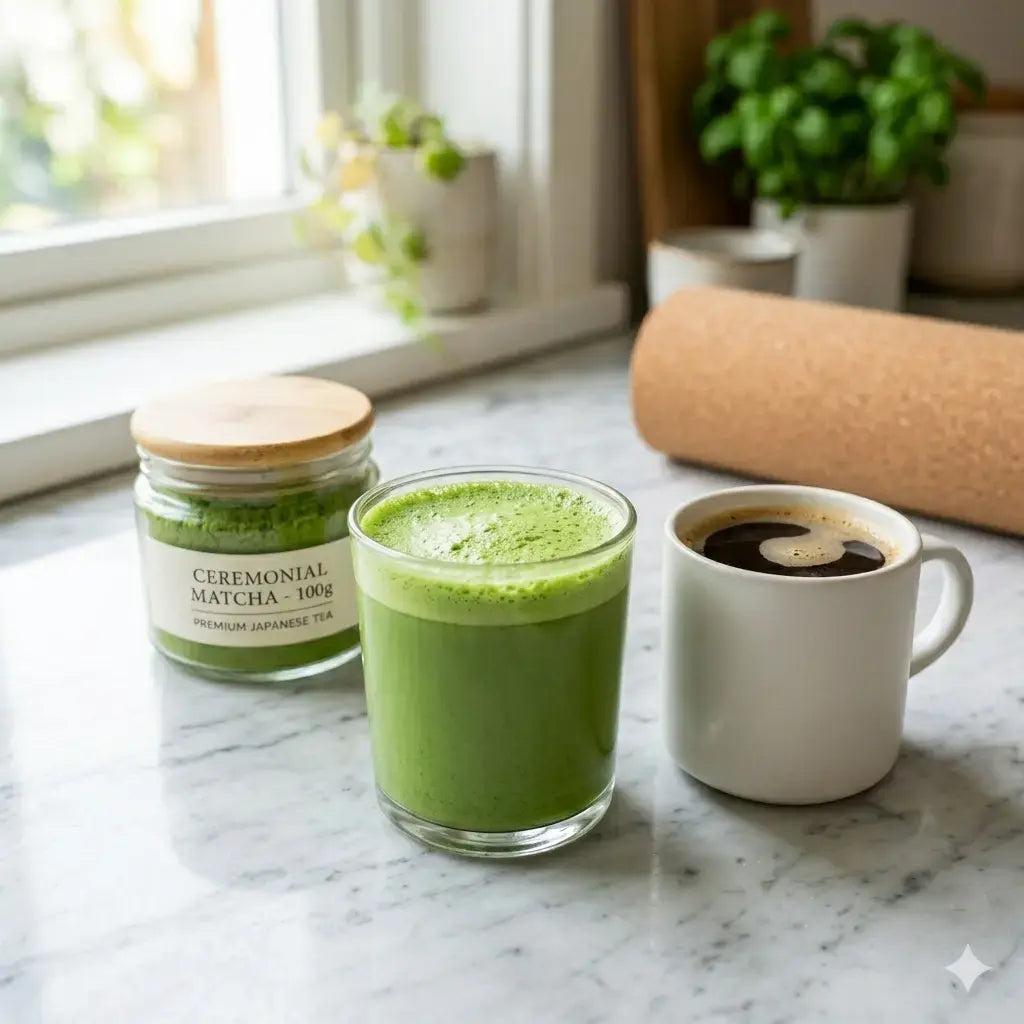
Choosing between matcha and coffee is not just about taste — it is about how each drink affects your energy, concentration, digestion, stress levels, and daily routine.
Both contain caffeine, but they create noticeably different experiences for many people.
Some people feel sharp and productive after coffee. Others experience jitters, crashes, or anxiety. Matcha is often described as calmer and more stable, but it also contains caffeine and does not affect everyone the same way.
Many people exploring matcha as a coffee alternative also start learning how to make matcha lattes at home because the flavor and caffeine experience feel very different from traditional coffee drinks.
The better choice depends on your body, your schedule, and what kind of energy you actually want.
This guide breaks down the real differences between matcha and coffee in a practical, balanced way so you can decide which fits your lifestyle best.
Matcha vs Coffee at a Glance
| Feature | Matcha | Coffee |
|---|---|---|
| Energy feel | Gradual and steady | Fast and intense |
| Typical caffeine | Moderate | Moderate to high |
| Focus style | Calm alertness | Immediate stimulation |
| Crash potential | Usually milder | More common |
| Anxiety impact | Often gentler | Can trigger jitters |
| Digestion | Less acidic | More acidic |
| Preparation | More intentional | Fast and convenient |
| Best for | Long focus sessions | Quick energy boosts |
Caffeine Content — How Different Are They Really?
One common misconception is that matcha contains very little caffeine. In reality, both matcha and coffee can contain meaningful amounts of caffeine depending on preparation and serving size.
A standard serving of matcha often contains around 40–70 mg of caffeine, while coffee can range anywhere from 80–200+ mg, depending on the brewing method.
For example:
-
Espresso usually contains less total caffeine than large drip coffees
-
Strong cold brew can contain very high caffeine levels
-
Ceremonial matcha may contain more caffeine than lower-grade matcha because younger leaves are used. High-quality ceremonial matcha, such as Imperial Cloud Ceremonial Matcha is often made from younger shade-grown tea leaves naturally rich in caffeine and amino acids.
This variability matters because people often compare one small cup of matcha against a large coffee without realizing the caffeine difference is not always consistent.
Why Matcha Feels Different
Many people describe matcha energy as smoother or calmer than coffee.
One reason is that matcha naturally contains L-theanine, an amino acid associated with relaxation and calm focus. This smoother stimulation profile is one reason many people replace part of their daily coffee intake with matcha.
L-theanine does not remove caffeine, but it may influence how stimulation feels subjectively for some people. Instead of a rapid spike, many people experience a steadier sense of alertness.
Coffee, on the other hand, is absorbed quickly and often produces a more immediate stimulant effect.
Neither experience is universally “better” — it depends on your caffeine sensitivity and goals.
Energy and Focus: Fast Stimulation vs Steady Alertness
Matcha for Sustained Focus
Matcha is often preferred for:
-
Deep work
-
Studying
-
Writing
-
Long meetings
-
Creative tasks
Because the stimulation tends to feel steadier, many people report fewer peaks and crashes compared to strong coffee.
This is one reason matcha has become popular among people who want productivity without excessive stimulation.
Preparation quality also matters. Smoother ceremonial-grade matcha usually creates a cleaner and less bitter drinking experience during long work or study sessions.
Coffee for Immediate Energy
Coffee is usually better when you need fast alertness.
It is commonly preferred for:
-
Early mornings
-
Intense workouts
-
Long drives
-
Sleep-deprived situations
-
Rapid mental activation
Coffee’s stronger and faster caffeine effect can feel more powerful, especially when energy levels are very low.
However, some people experience shakiness, irritability, or a noticeable crash later in the day, particularly with high intake.
Matcha vs Coffee for Anxiety and Stress
Caffeine affects everyone differently.
Some people tolerate coffee extremely well, while others feel anxious after even one cup.
Matcha is often considered gentler because it combines caffeine and L-theanine, which may promote a calmer mental state in some individuals.
Coffee may increase feelings of nervousness more noticeably in caffeine-sensitive people, especially when consumed quickly or on an empty stomach.
That said, matcha is not caffeine-free. People who are highly sensitive to stimulants can still experience:
-
Restlessness
-
Elevated heart rate
-
Difficulty sleeping
-
Anxiety symptoms
The most important factor is usually total caffeine intake rather than the source alone.
Digestion and Gut Effects
Coffee and Acidity
Coffee is naturally acidic and can irritate the stomach for some people.
Possible effects include:
-
Acid reflux
-
Heartburn
-
Stomach discomfort
-
Increased bowel activity
Other people digest coffee without any issues at all, especially when drinking lower-acid coffee or consuming it with food.
Matcha and Digestion
Matcha is generally less acidic than coffee and is often easier on the stomach.
Many people tolerate matcha better on an empty stomach, although very concentrated matcha can still cause nausea in some individuals.
Preparation quality also matters. Poor-quality bitter matcha may feel harsher than smoother ceremonial-grade matcha.
If you're unsure how to recognize smoother and less bitter matcha, read our guide on how to choose high-quality matcha tea.
Iron Absorption Timing
Both coffee and matcha contain compounds called tannins, which may reduce iron absorption when consumed directly alongside iron-rich meals.
People with low iron levels may benefit from drinking matcha or coffee between meals rather than immediately with food.
This is especially relevant for individuals prone to Iron Deficiency Anemia or those following plant-based diets.
Sleep and Recovery
Caffeine can affect sleep much longer than many people realize.
The body processes caffeine at different speeds depending on genetics, stress levels, medication use, and overall sensitivity.
Coffee’s stronger and faster stimulant effect can sometimes interfere with sleep if consumed too late in the day.
Matcha may feel gentler, but it can still disrupt sleep because it still contains caffeine.
As a general guideline:
-
Coffee is often best earlier in the morning
-
Matcha may work better as an earlier afternoon option
-
Highly sensitive individuals may need to stop caffeine intake by early afternoon, regardless of the source
Poor sleep quality can eventually reduce the productivity benefits of either drink.
Health Benefits of Matcha vs Coffee
Matcha Benefits
Matcha contains high levels of catechins, especially Epigallocatechin Gallate, a powerful antioxidant associated with cellular protection and metabolic support.
Because matcha uses the entire tea leaf in powdered form, you consume more of the plant compounds directly.
Potential benefits associated with matcha include:
-
Antioxidant intake
-
Calm focus
-
Metabolic support
-
Daily ritual and mindfulness
You can also read our full guide on the benefits of matcha for a deeper breakdown of antioxidants, focus, and metabolic support.
Coffee Benefits
Coffee is also rich in antioxidants and has been widely studied for its relationship with cognitive performance and long-term health outcomes.
Potential benefits associated with moderate coffee intake include:
-
Increased alertness
-
Improved reaction time
-
Mental performance support
-
Exercise performance enhancement
Coffee is not inherently unhealthy — preparation method, quantity, and individual tolerance matter significantly.
Who Should Choose Matcha?
Matcha may be the better option if you:
-
Want steadier energy
-
Feel anxious after coffee
-
Need long focus sessions
-
Prefer a calmer caffeine experience
-
Want a more mindful routine
-
Need an afternoon caffeine option
-
Often drink caffeine on an empty stomach
Many beginners start with smoother ceremonial blends like Jade Cloud Ceremonial Matcha because they are naturally less bitter and easier to drink regularly.
Who Should Choose Coffee?
Coffee may suit you better if you:
-
Need immediate stimulation
-
Prefer convenience and speed
-
Exercise early in the morning
-
Enjoy stronger caffeine effects
-
Tolerate caffeine well
-
Want a more intense pre-workout boost
Best Times to Drink Matcha vs Coffee
| Situation | Better Choice |
|---|---|
| Deep work or studying | Matcha |
| Early morning fatigue | Coffee |
| Afternoon productivity | Matcha |
| Pre-workout energy | Coffee |
| Empty stomach | Usually matcha |
| Anxiety sensitivity | Matcha |
| Fast mental activation | Coffee |
| Long meetings | Matcha |
Can Matcha Replace Coffee?
Yes — many people transition from coffee to matcha, either partially or completely.
A gradual approach usually works best:
-
Replace one daily coffee with matcha.
-
Reduce caffeine slowly instead of stopping abruptly
-
Use coffee strategically when stronger stimulation is needed
Many people begin with simple matcha lattes before transitioning toward more traditional matcha preparation methods.
Some people eventually prefer matcha entirely, while others keep both depending on the situation.
There is no requirement to choose only one.
If you're new to preparing matcha, our complete guide on how to make the perfect matcha at home explains whisking, water temperature, and common beginner mistakes.
FAQ About Matcha vs Coffee
Is matcha healthier than coffee?
Not necessarily. Both contain antioxidants and can fit into a healthy lifestyle. The better choice depends on your caffeine tolerance, digestion, sleep quality, and personal goals.
Which has more caffeine: matcha or coffee?
Coffee usually contains more caffeine per serving, but caffeine levels vary greatly depending on preparation method and serving size.
Does matcha help with anxiety better than coffee?
Some people feel calmer with matcha because of L-theanine, but both still contain caffeine and can affect sensitive individuals.
Is matcha better for studying and focus?
Many people prefer matcha for long study sessions because the energy tends to feel steadier and less jittery.
Can matcha upset your stomach?
Yes, especially when consumed in large amounts or on a very empty stomach. However, many people find it gentler than coffee.
Is coffee better before workouts?
For many people, yes. Coffee’s faster and stronger stimulant effect often makes it popular before exercise.
Does matcha stain teeth less than coffee?
Generally yes. Matcha can still stain teeth over time, but coffee tends to cause more noticeable discoloration for many people.
Can matcha improve focus without jitters?
Some people experience calmer focus with matcha due to its combination of caffeine and L-theanine, though individual reactions vary.
Is matcha easier on the stomach than coffee?
Many people find matcha gentler because it is less acidic than coffee, although individual digestion and caffeine sensitivity still vary.
Conclusion
The better choice between matcha and coffee depends less on trends and more on how your body responds to caffeine.
Matcha is often preferred for calmer focus, sustained energy, and smoother daily productivity. Coffee is often preferred for rapid stimulation, convenience, and stronger performance effects.
Both drinks have benefits, both contain caffeine, and both can fit into a healthy lifestyle when used intentionally.
Understanding matcha quality and preparation techniques can also dramatically improve the overall experience for people transitioning away from coffee.
Instead of asking which is universally “better,” the more useful question is:
Which one helps you feel and perform your best?
Share:
Benefits of Matcha: Why This Green Powder Is Replacing Coffee